Buying Guides
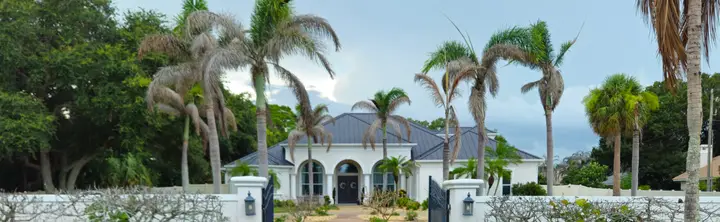
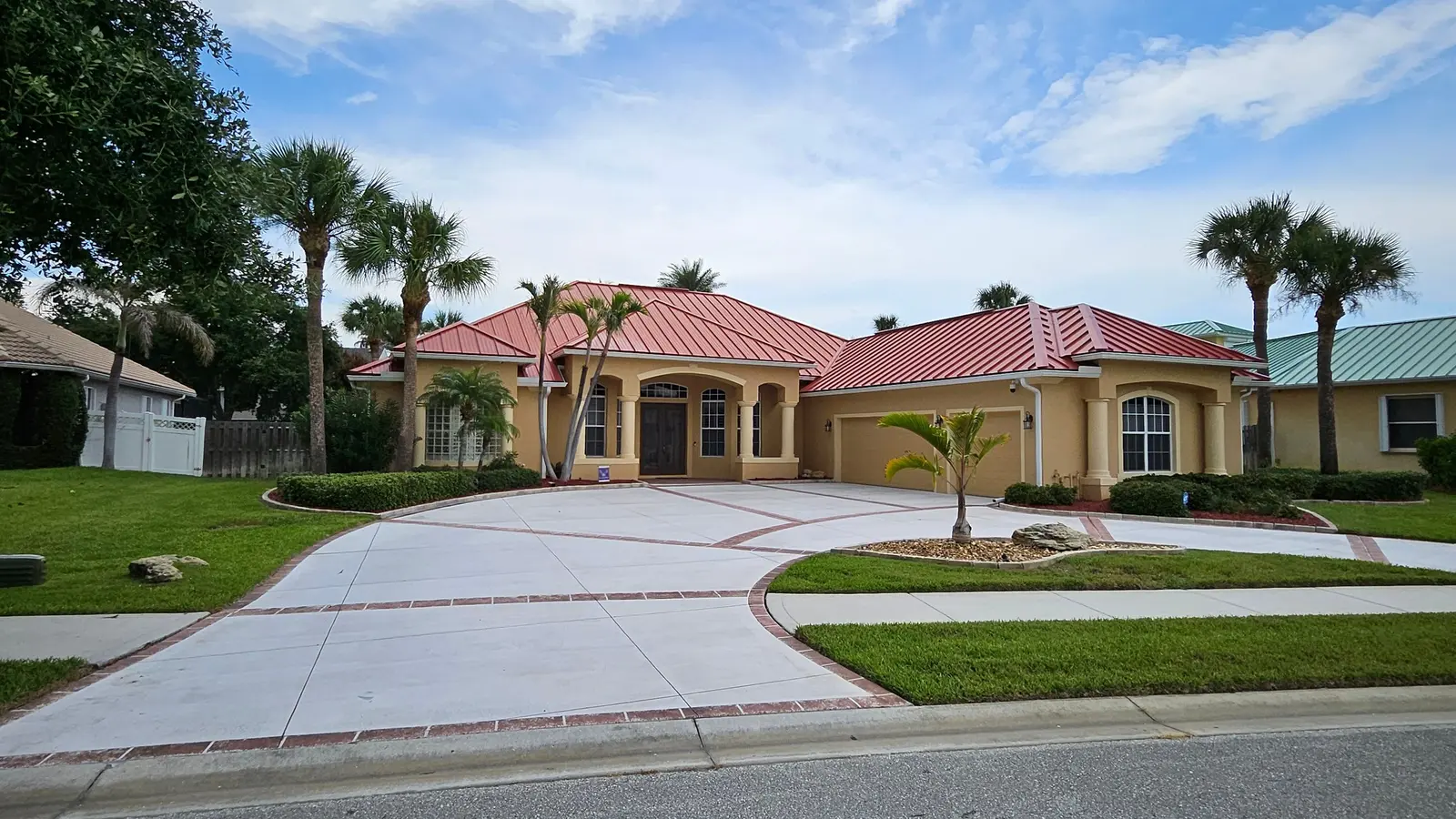
A metal roof costs more than a shingle roof on the day it goes on. That is the honest starting point. What the extra money buys you is a roof that behaves differently in Florida conditions: high wind, daily UV, afternoon storms, and salt air near the coast. This guide walks through what a metal roof actually does better here, and it is upfront about the places where metal does not change much.
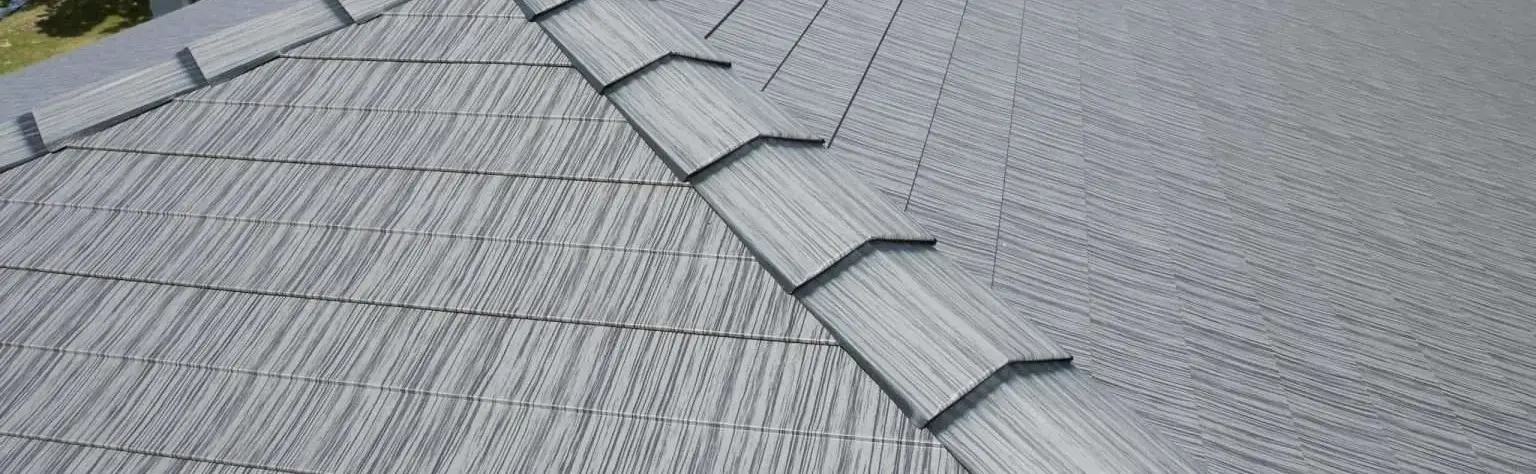
Wind is the reason most Florida homeowners look at metal in the first place. A properly installed metal roof carries wind ratings of 140 mph and higher. Standing seam systems hide every fastener under the seam, so there are no exposed screw heads for a storm to work loose, and the panels attach with concealed clips tested against uplift standards like ASTM E1592 and UL 580. The systems we install carry Florida Product Approval for use under the current Florida Building Code.
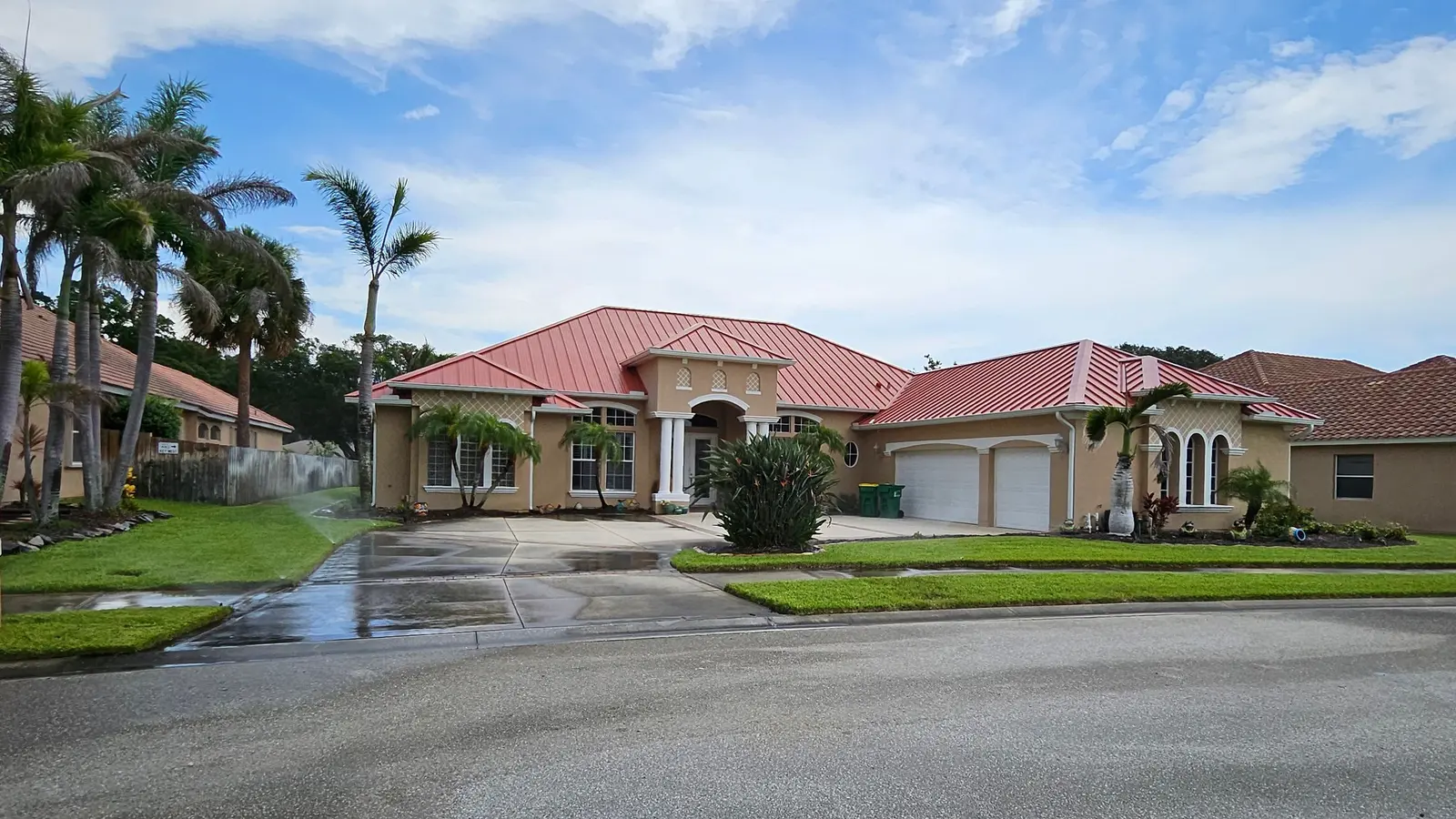
Roof shape matters too. A hip roof, which slopes on all four sides, handles wind better than a gable end, and it also grades better on the wind mitigation form your insurer uses. Metal does not change your roof’s shape, but pairing a wind-rated metal system with a hip roof is about as strong as residential roofing gets in this state. Our standing seam page covers how those systems are rated.
Dark asphalt shingles soak up the sun and radiate that heat into your attic through the afternoon and into the evening. Metal does the opposite. A reflective cool-roof finish bounces a large share of the solar load back off the panel before it becomes attic heat, and that shows up on your July and August cooling bills. Depending on your color, insulation, and how your attic is vented, a reflective metal roof can cut cooling costs by 10 to 25 percent. In a place where the air conditioner runs most of the year, that is money back every month, not just during a heat wave. The Kynar 500 (PVDF) finishes we use hold that reflectivity and their color for decades instead of chalking out after a few summers.
A shingle roof in Florida is often a 15 to 20 year roof, and heat and storm cycling can shave years off even that. A quality metal roof lasts 40 to 70 years. Play that forward over the time you expect to own your home. Where a shingle roof means a second reroof, and maybe a third, a metal roof is usually one and done. Coating quality and coastal exposure move the number around. A premium PVDF finish on an inland home sits at the top of that range, while a home a few hundred feet from the surf asks more of the metal and the fasteners. Even on the low end, metal outlasts asphalt by a wide margin here.
See if a metal roof fits your Florida home
Talk it through with a licensed and insured Florida contractor (FL License CCC1337805), then request a free written estimate when you are ready.
Explore Residential Metal RoofingFlorida law requires insurers writing homeowners policies in the state to offer premium credits for construction features that reduce wind damage (Florida Statute 627.0629). A new metal roof, installed to current code and documented on a wind mitigation inspection (Form OIR-B1-1802), commonly qualifies for a credit on the wind portion of the premium, often in the 15 to 35 percent range. Your actual number depends on your insurer, your county, and the rest of your home’s wind features.
A reroof is also the cheapest moment to upgrade the roof deck nailing and add a sealed secondary water barrier, because the deck is only exposed while the old covering is off. Both are line items on the same inspection form. We build a metal roof around those criteria and hand you the permit records, product approval numbers, and installation photos. Submitting the form to your insurer is something you do with your own agent. We are roofers, not adjusters, and Florida law (s. 489.147) keeps it that way. Our insurance savings guide walks through the credits in detail.
Asphalt sheds granules the whole time it is on your roof, and those granules are the sun protection for the asphalt underneath. After a hard blow you often find shingle pieces scattered across the yard. A standing seam metal roof has no granules to lose and no exposed fasteners to back out, so the maintenance list is short: keep the valleys and gutters clear, rinse the salt off if you are near the water, and have it looked at after a major storm. Fewer small repairs also means fewer insurance deductibles paid out over the years you own the house.
A metal roof is not magic, and a good buying decision means knowing its limits. Rain noise is the big myth. Over solid decking with proper underlayment, a modern metal roof is not meaningfully louder in a storm than a shingle roof. You are not getting the tin-roof-on-a-barn sound. Metal also will not fix a structural problem. If your trusses are undersized or your flashing details were wrong, those issues follow the new roof up unless they are corrected during the job. And metal is still the more expensive option on install day. If the budget is tight or you are moving soon, a well-installed shingle roof can be the right call, and we will tell you so.
On the barrier island and near the Indian River Lagoon, the salt air that corrodes gutters and window screens works on a roof too. That is where the material choice gets specific. For homes close to salt water in Vero Beach and across Indian River County, we lean toward marine-grade aluminum, which does not rust, with concealed fasteners for long service in that environment. Farther inland, coated Galvalume steel is often the better value. Our Vero Beach metal roofing page has the local detail, including permitting through the City of Vero Beach and Indian River County.
Still weighing whether the numbers work for your situation? Our companion guide on whether a metal roof is worth it in Florida runs the payback math. When you want real figures for your own roof, request a free metal roof quote or call (800) 303-3309.
Wind performance. A metal roof installed to current Florida Building Code carries wind ratings of 140 mph and higher, and standing seam systems with concealed fasteners are built specifically to resist the uplift that pulls shingles off. The longevity, the energy savings, and a possible insurance credit all matter, but wind is the reason most Florida homeowners start looking.
They often qualify for a credit. Florida insurers are required to offer wind mitigation discounts, and a code-compliant metal roof documented on a wind mitigation inspection (Form OIR-B1-1802) commonly earns 15 to 35 percent off the wind portion of the premium. The exact figure depends on your insurer, your county, and your home's other wind features. You claim it through your own agent.
Usually 40 to 70 years, compared with 15 to 20 for asphalt shingles in Florida heat. Coating quality and how close you are to salt water move that number. A premium PVDF finish on an inland home sits near the top of the range.
No, not when installed over solid decking with proper underlayment. A modern metal roof in a rainstorm is about as quiet as any other roof type. The loud-metal-roof idea comes from bare panels on an open barn frame, which is not how a house is built.
Maybe not. If you expect to sell within a few years and cannot recover the higher upfront cost in the sale price, a quality shingle roof may pencil out better. Our companion guide on whether a metal roof is worth it in Florida covers that math.
Call us at (800) 303-3309 or request your free, no-obligation estimate below.
Call us at (800) 303-3309 or request your free, no-obligation estimate. We'll carefully evaluate your roof and answer your questions.
Get a Free Roof Quote Call (800) 303-3309