Buying Guides

Tile is one of the most recognizable roofs in Florida, the barrel-shaped profile on Spanish and Mediterranean-style homes up and down the coast. It earns that popularity honestly. But metal roofing, including profiles built to echo a tile look, competes for the same homeowner with a different set of tradeoffs: less weight, different storm behavior, and a different cost curve over the life of the roof. This isn’t an argument that tile is a bad choice. It’s a straight comparison, so you know what you’re actually weighing when you choose one over the other.
Clay and concrete tile is heavy. Depending on the profile, a tile roof commonly runs somewhere around 850 to 1,100-plus pounds per square (a 10x10 section of roof), and that load has to go somewhere. On an older home, especially one not originally engineered for tile, a reroof to tile can trigger a structural engineering review and reinforcement before a permit gets pulled. Metal roofing, including metal tile and metal shingle profiles built to mimic tile’s look, typically weighs somewhere in the 50 to 150 pound per square range. Most homes can carry that without any structural upgrade at all, which matters a lot if you’re reroofing a decades-old house that was never built with tile in mind.
Individual tiles can crack or dislodge under wind-driven debris, and an older or improperly fastened tile roof can shed pieces in a serious storm, which then becomes debris of its own. Age matters here more than it does with metal: a tile roof installed decades ago under an older fastening standard behaves differently in wind than one installed to current Florida Building Code. This is informational, not a claim about how any specific policy or storm event will play out; every roof’s real-world performance depends on installation quality, age, and the storm itself. Standing seam and metal tile systems, properly installed, commonly carry wind ratings of 140 mph or higher, and their fastening (concealed clips on standing seam, mechanical fastening on metal tile) behaves differently under uplift than a stack of individual tiles does. For the general case for metal roofing in Florida, including the wind and durability picture beyond just tile, see our guide to metal roofing’s advantages.
Tile and metal both sit toward the higher end of Florida roofing costs, well above a basic asphalt shingle job. Where they start to separate is lifespan and repair cost. A tile roof commonly lasts somewhere in the 30 to 50 year range; a quality metal roof runs 40 to 70. Repairs differ too. A cracked tile usually needs a matching replacement, and on an older roof the original color run may be discontinued, which turns a small repair into a bigger, more expensive search. Metal panel repairs are typically more straightforward, since manufacturers keep standard colors in stock for much longer. Insurance is part of the picture as well: a code-compliant metal roof documented on a wind mitigation inspection can qualify for a credit on the wind portion of a homeowner’s premium, something worth asking your agent about regardless of which material you choose. For the fuller payback math on metal versus the alternatives, our is a metal roof worth it in Florida guide breaks down the numbers.
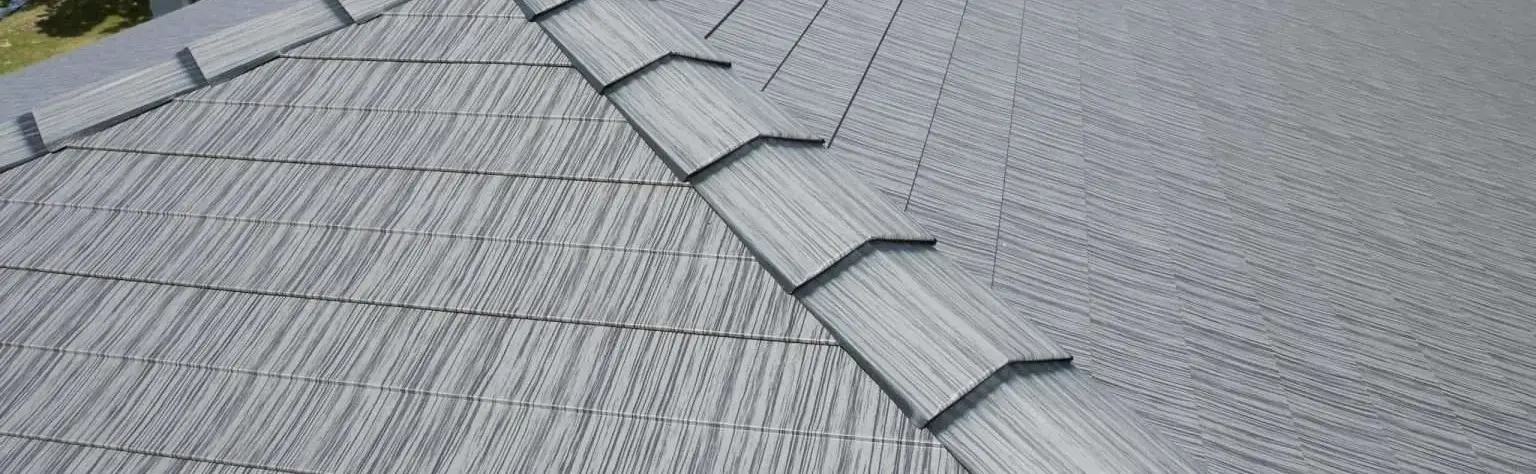
This is where the two materials stop being pure opposites. Stone-coated metal roofing is steel panels coated with real stone chips, formed into profiles that read as tile, shake, or slate from the street. You get a look close to traditional tile with a fraction of the weight and a wind rating that comes from the metal, not the clay. Our stone-coated metal roofing guide covers how the system is built and installed if you want the full picture.
See if stone-coated metal fits your home
Get the tile look with a lighter, wind-rated system from a licensed and insured Florida contractor (FL License CCC1337805).
Explore Stone-Coated MetalStone-coated isn’t the only metal option built with tile in mind. Metal tile roofing uses formed steel or aluminum panels shaped into a barrel or Spanish-tile profile without the stone coating, a lighter-weight, often lower-cost way to get a similar silhouette. Which one makes sense depends on the exact look you want and your budget; we’ll walk through both options during an in-person estimate.
Melbourne and the surrounding Brevard County coastline see plenty of tile roofs on older and custom homes alike, and salt air adds its own wear pattern to any roofing material near the water. A metal roof handles that environment well when the right alloy and coating are matched to the job, whether that’s a barrier island property or a mainland Melbourne neighborhood further from the coast. Our Melbourne metal roofing page has local service details for the area.
Request a free metal roof quote and we’ll help you weigh metal against tile for your specific home.
Both sit toward the higher end of roofing costs, and the exact comparison depends on the specific tile profile and metal system you're pricing. Metal typically wins over the life of the roof due to a longer lifespan and simpler repairs, even when the upfront numbers are close.
Yes. Stone-coated metal roofing and metal tile panels are both built in profiles that read as clay or Spanish tile from the street, and stone-coated adds a textured, granular finish that gets even closer to the traditional look.
Both can perform well when properly installed to Florida Building Code. Individual tiles can dislodge or crack under wind-driven debris, while standing seam and metal tile systems commonly carry wind ratings of 140 mph or higher thanks to how the panels fasten together. This is general, informational guidance, not a claim about any specific storm or policy outcome.
Sometimes, especially on an older home not originally engineered for tile's weight. Tile commonly runs 850 to 1,100-plus pounds per square, versus roughly 50 to 150 for metal, so a structural review is worth budgeting for before committing to a tile reroof.
Steel panels coated with real stone granules, formed into profiles that mimic tile, shake, or slate. It combines metal's low weight and wind resistance with a look much closer to traditional tile or shingle roofing than a plain metal panel gives you.
Call us at (800) 303-3309 or request your free, no-obligation estimate below.
Call us at (800) 303-3309 or request your free, no-obligation estimate. We'll carefully evaluate your roof and answer your questions.
Get a Free Roof Quote Call (800) 303-3309