Repair & Insurance
You have a new metal roof, or an older one you trust, and someone is coming to write a wind mitigation report. Maybe your agent asked for one. Maybe you heard it can trim the wind portion of your homeowners premium and you want to know what you are signing up for.
The inspection itself is simple. A licensed inspector walks the outside of the house, climbs into the attic, and fills out a state form that records the wind-resistant features of the home. That inspector is not your roofer. The report goes to you, and you send it to your insurance company.
This guide covers what the inspector looks at, where a metal roof helps, and how to get ready. For the discount itself, see our article on how a metal roof can lower your homeowners insurance in Florida. We won’t repeat it here.
The state’s Uniform Mitigation Verification Inspection Form (OIR-B1-1802) is the standard document. The Office of Insurance Regulation revised it for 2026, so your inspector works from the current version. The main categories are these:
Each one gets its own line on the form. That matters, because a roof can score well on some lines and poorly on others.
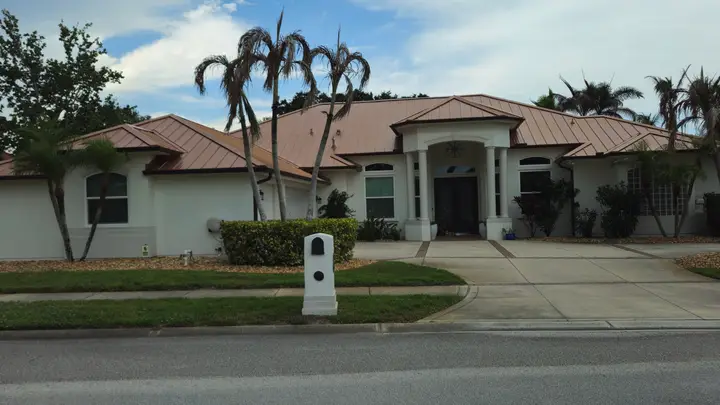
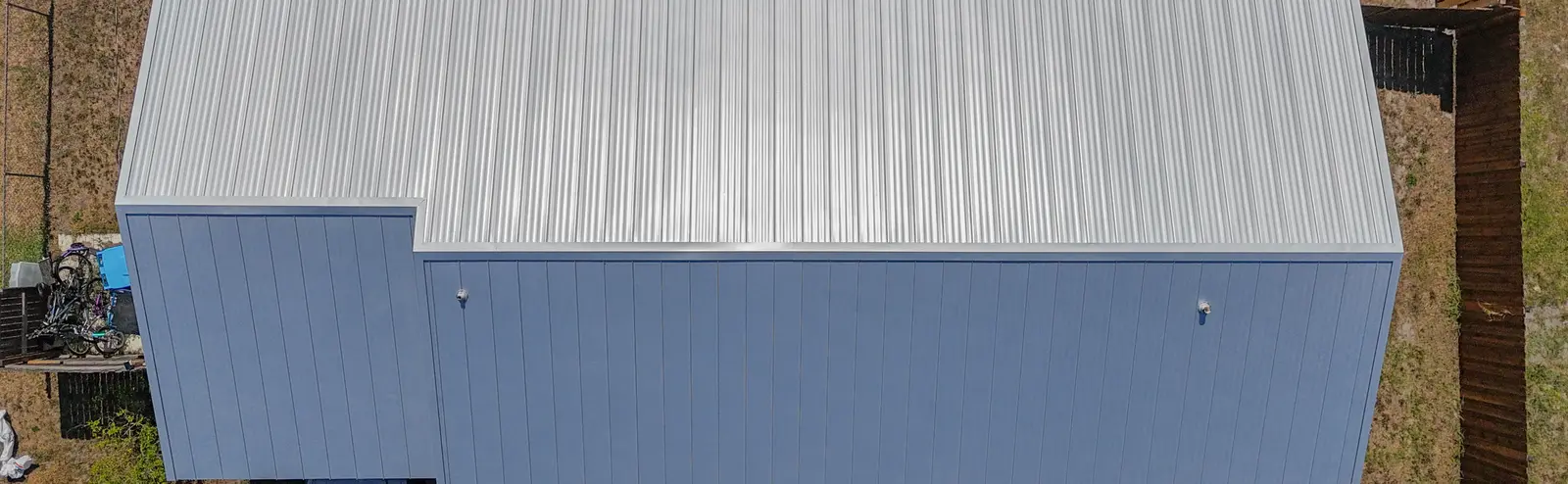
A new metal roof usually does well on the roof covering line. It is installed under a current permit, with panels and fasteners that have Florida product approval, so the paperwork is clean. If your house has a hip roofline, like the copper standing seam roof in the photo above, that line helps too, though the shape comes from the house and not from the metal.
Deck attachment and secondary water resistance depend on how the roof was built. A reroof that includes re-nailing the deck to current standards and a sealed underlayment can support both lines, but the inspector needs proof or something they can see. Pictures from the install and your permit records do that job.
Now the part people miss. Roof-to-wall connections and opening protection have little to do with your roof panels. If the original framing used toe nails, a new metal roof does not change that line. If your windows have no shutters or impact rating, the openings line stays where it is. Those are separate projects with separate costs, and an honest inspector will tell you so.
A little prep makes the visit faster and the report more accurate.
Get a licensed roof assessment
A licensed and insured Florida contractor (FL License CCC1337805) can look at your roof and tell you what condition it is in. This is information about the roof only, not advice on insurance.
See How Our Roof Assessments WorkYou get the completed form, and you decide what to do with it. Most homeowners send it to their insurance agent and ask whether any wind credits change. The insurer reviews it and makes its own call on the premium.
We don’t advise on coverage, claims, or what your policy should say. That is between you, your agent, and your insurer. What we can do is make sure the roof is documented well, and give you a straight assessment of its condition. If you are also weighing an age-related renewal question, our piece on Florida’s 2026 roof-age insurance law explains what changed.
One practical note. If the inspector flags a problem with the roof itself, like a loose flashing or a fastener backing out, have it looked at by a roofer. Our guide to whether you can repair a small metal roof leak yourself is a good starting point before you climb anywhere.
Brevard County homes near the Indian and Banana Rivers take wind off open water, and a lot of the housing stock has hip roofs that suit metal well. We install standing seam and other metal systems across Merritt Island. If you’re in the area, our Merritt Island metal roofing page shows what we do locally, and our residential metal roofing services cover the systems we install.
Ready to talk about your roof? Request a free quote and we’ll come take a look.
Repair & Insurance
Repair & Insurance
Repair & Insurance
Florida law lists who can sign the state form, and the list includes licensed home inspectors, licensed general, building or residential contractors, professional engineers and building code inspectors. The inspection is separate from your roofing install, so ask your insurance agent or a local inspector who does them in your area.
The Florida Office of Insurance Regulation says the state form is valid for up to five years, as long as nothing material changes on the structure and the form has no inaccuracies. If you replace the roof or make major changes, ask your insurer whether they want a fresh report.
No. Credits come from the features the inspector documents on the form, not from the roof material by itself. A metal roof can help on several items, but the discount your insurer applies is their decision, so send them the report and ask what it changes.
Yes, and it is usually a good time, since the permit, final inspection and product approval paperwork are fresh and the attic is easy to reach. Have your installation records ready so the inspector can document what was actually built.
Call us at (800) 303-3309 or request your free, no-obligation estimate below.
Call us at (800) 303-3309 or request your free, no-obligation estimate. We'll carefully evaluate your roof and answer your questions.
Get a Free Roof Quote Call (800) 303-3309